AI Platform
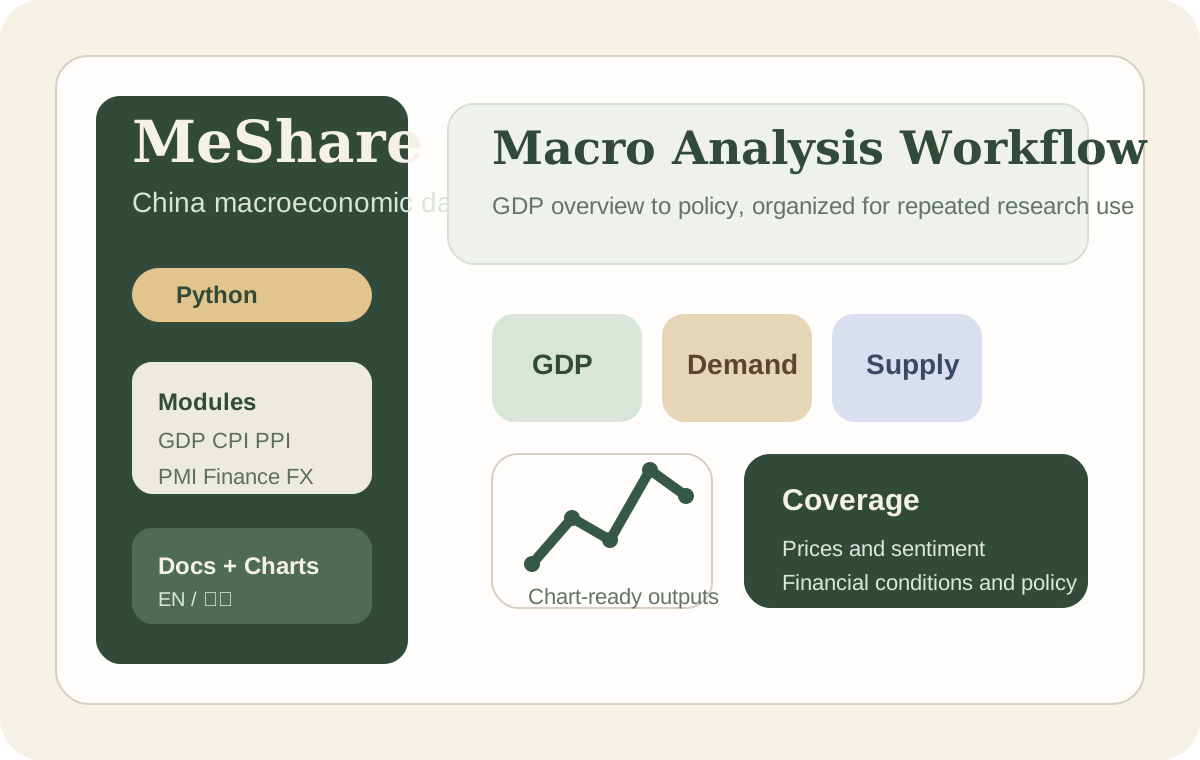
MeShare: China Macroeconomic Data Library
- A Python library for China's macroeconomic data, featuring bilingual documentation in Chinese and English for data querying, automated charting, and assisted analysis.
- Compared to common API, MeShare focus more on China's macroeconomic data, covering GDP, prices, PMI, finance, interest rates, bonds, and foreign exchange.
AI Skill
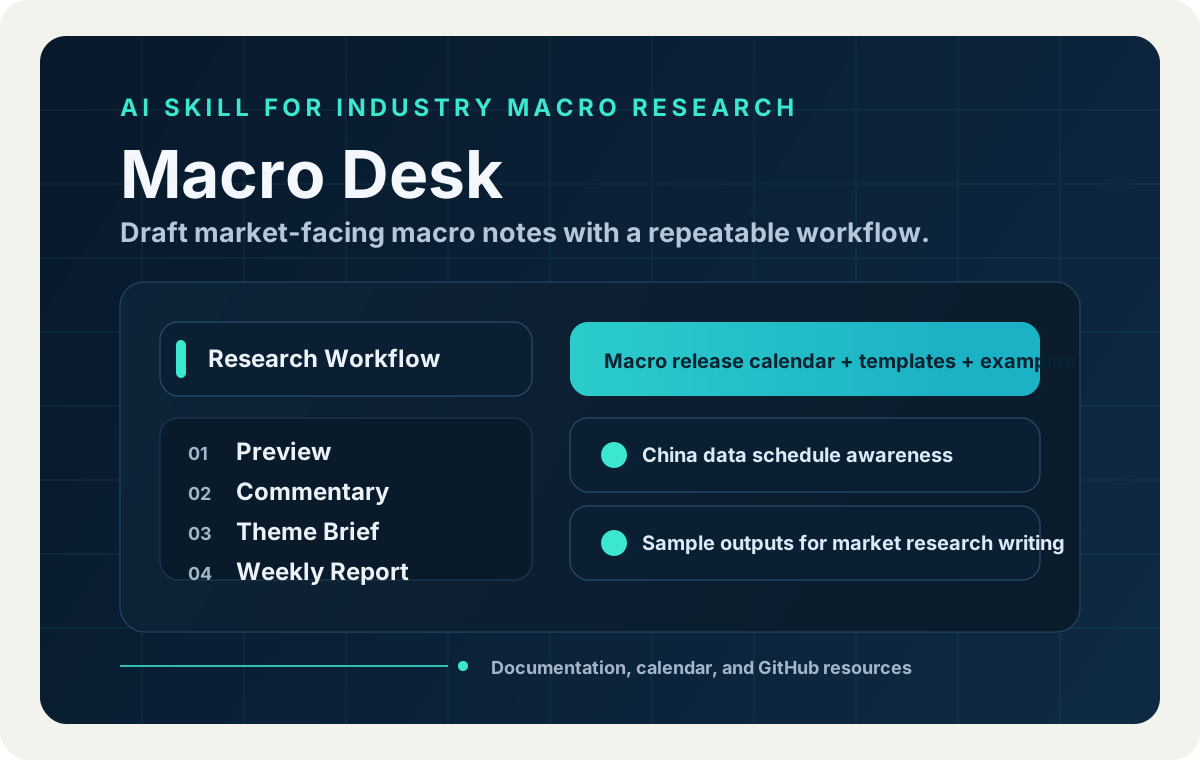
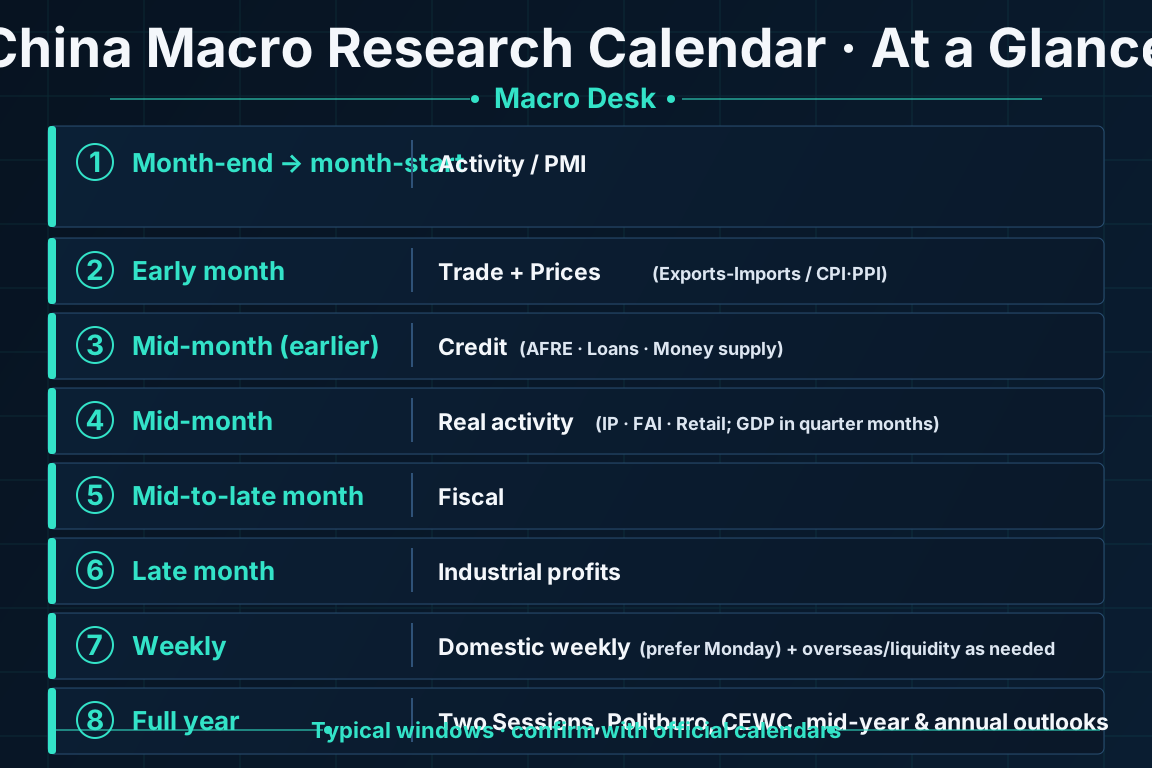
Macro Desk: Skill for Industry Macro Research Drafting
- An AI skill for automatically drafting macro research reports around China's data releases, covering outlooks, event commentaries, thematic briefings, and macroeconomic weekly reports.
- Sample reports are included in the project documentation.
Code
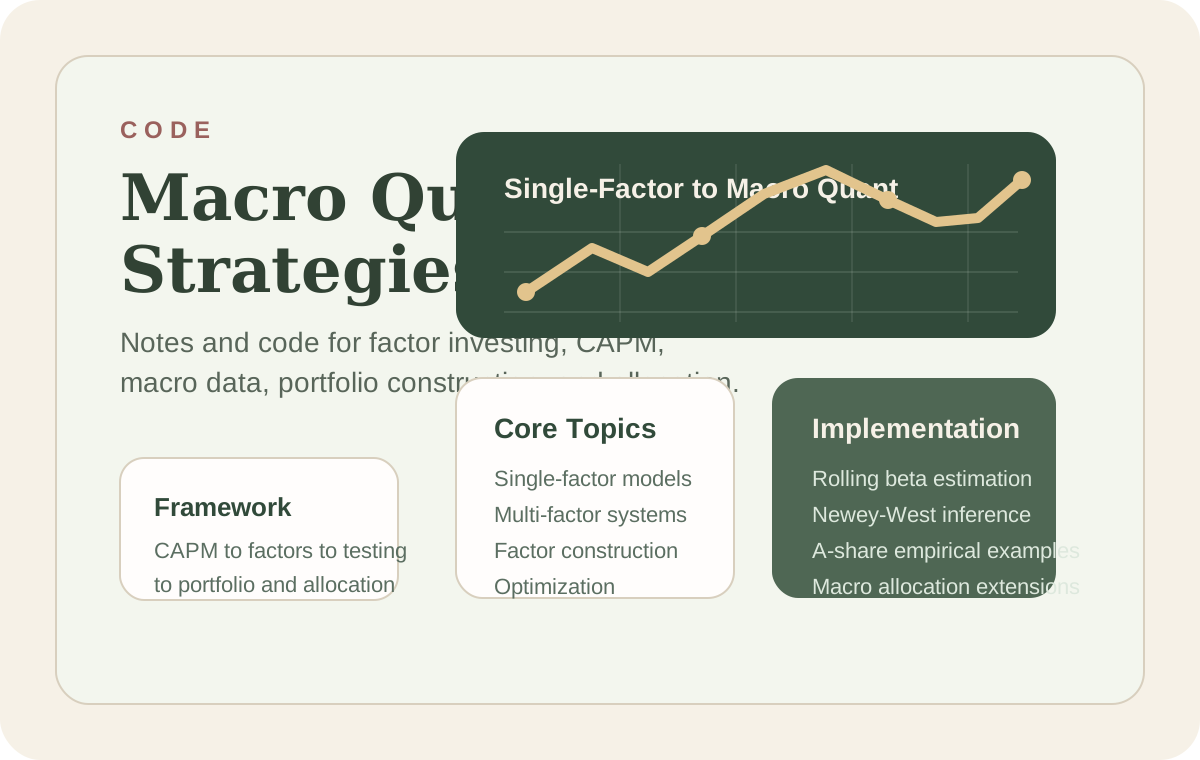
Macro Quant Strategies
- Notes and code on traditional factor quantitative investing and emerging macro quantitative investing.
- Starting from CAPM and classical style factors, progressively expanding to a broader factor library and macro allocation strategies.
Code
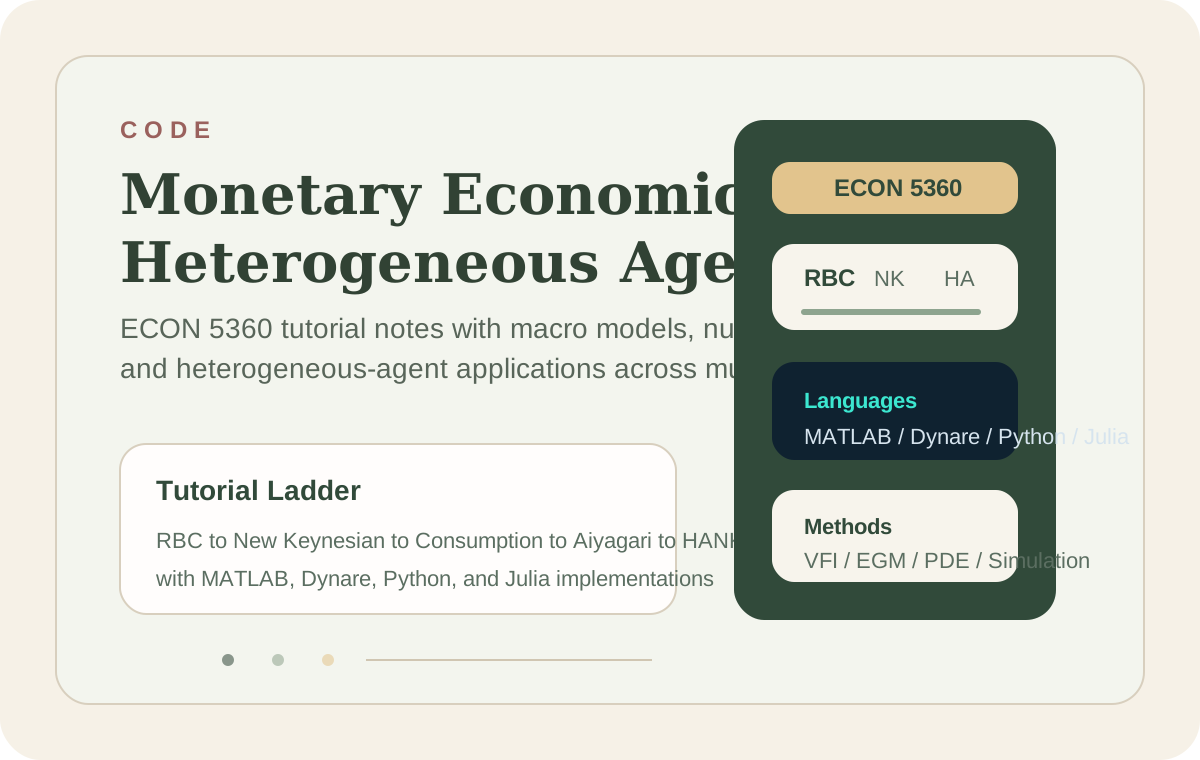
Monetary Economics and Heterogeneous Agent Model
- Notes and code on monetary economics, covering RBC models, New Keynesian frameworks, numerical methods, the Aiyagari model, and HA models.
- RBC models are implemented using MATLAB, Dynare, Python, and Julia. Other models are implemented primarily in MATLAB.
Data
Lianjia Housing Transaction Data Pipeline
- A Selenium-based web scraper for Lianjia transaction data, supporting batch scraping by district, resumable downloads, and CAPTCHA interruption handling.
- Lianjia's publicly listed transactions are dynamically adjusted, causing historical listings to appear and disappear inconsistently across different scraping times.
- An account gets banned after scraping approximately 15,000 items on average, making the data acquisition cost relatively high. Like-minded peers are welcome to collaborate.
Data
Discount Rates and MPC among Food Delivery Couriers
- Collected demographic, financial, discount factor, and consumption propensity data of frontline delivery riders through offline interviews and online questionnaires.
- Two rounds of surveys have been completed so far, covering over 30,000 respondents, with a 5 RMB cash reward offered for valid responses, yielding over 8,000 data entries.
- This has successfully materialized abstract economic concepts like discount factors and consumption propensities into concrete figures, holding high research value.